Is It Cheating to Use Notes in a Zoom Interview?
Published 2026-10-01 · 7 min read
No. For a normal job interview, glancing at notes you wrote is preparation, not cheating. Your interviewer is probably reading from a scorecard at the same time. Two things do cross the line: an AI feeding you answers live, which many employers treat as disqualifying, and proctored assessments, where outside help is explicitly banned. That last one is cheating, full stop.
About me, so you can weigh what follows: I make GlideRail, a macOS notes app whose windows are invisible to screen capture, which gives me a stake in this answer. Every employer policy and survey below is linked to its source, and one section tells you not to use my app at all.
Your interviewer has notes too
Look at the other side of the table. Google's own hiring guidance (published for any company to copy) is built on structured interviewing: pre-vetted questions, standardized scoring rubrics, and written feedback for every answer. Your interviewer is working from a document. They're taking notes about you while you answer.
Career-advice sites agree on the candidate side. Indeed's guidance on bringing notes to an interview calls prepared questions and reference notes acceptable. The standard caution isn't ethics, it's execution: don't bring so much paper that you stop having a conversation.
That's the frame worth keeping. An interview is not a memory test with rules against reference material. It's a structured conversation where one side always uses notes, and the other side is oddly embarrassed to.
What are interview notes actually for?
Interview notes don't fake experience; they surface it. A good sheet holds the things you already know but might not produce on demand, on camera, with adrenaline in your system: your interviewers' names with one line on each, five or six cue words per story ("migration, 3 weeks, $40K saved"), the numbers you'd hate to blank on (quota attainment, budget you owned, team size), your questions for them, and the salary figure you decided on when you were calm.
Everything there is something you already know, and blanking under pressure happens to strong candidates precisely because they care. Notes are a net under the high wire. The act you're performing is still yours.
We keep a full Zoom interview cheat sheet guide if you want the template.
Reading verbatim fails, but not because it's cheating
Reading fully written-out answers verbatim loses interviews on performance, not morality. That's the first real line, and it isn't an ethical one. Your cadence flattens. Your eyes track lines. And the structure gives you away: a scripted answer addresses the question you hoped for, not the follow-up you got. Interviewers don't need detection software to notice someone reading; humans are excellent at it.
So the practical rule: notes as cues, never as paragraphs. If you struggle with the delivery side, that's a skill with real fixes; we wrote up how to stop sounding like you're reading.
Is using AI during an interview cheating?
Using AI during the interview (a tool listening and feeding you answers live) is where employers draw the line, and it's the reason "are notes cheating" suddenly needs answering at all. According to TopResume's May 2025 survey of 600 U.S. hiring managers, 57% say real-time tools like whispering bots or answer-generating apps should never be used when speaking with a potential employer.
The tools in question are things like Cluely, which launched from a Columbia suspension by promising to help you "cheat on everything": an AI that listens to your interview and writes your answers in real time.
Employers have responded in writing. Amazon issued internal guidance that candidates caught using AI tools during interviews can be disqualified, and asks candidates to acknowledge they won't use unauthorized generative AI in interviews or assessments. At Google, Sundar Pichai has said the company is moving at least one interview round back in person, citing AI-assisted cheating in virtual interviews.
The distinction employers are converging on is clean, and it matches common sense: AI before the interview is preparation; AI answering during the interview is impersonation. Candidates already treat it that way: Insight Global's 2025 AI in Hiring report found 31% of job seekers use AI to prepare for interviews. An interview exists to measure the person who will show up to work. When a model supplies the answers, the measurement is of the model, and the model isn't taking the job.
There's also a purely selfish reason to skip these tools: they stream your interview to a cloud service and they can be wrong, out loud, in your voice. We've broken down what tools like Cluely actually do with your data; it's not flattering.
Proctored assessments: yes, that's cheating
Say it without hedging: if you're in a proctored assessment, a certification exam, or any test with stated closed-book rules, using hidden notes or AI is cheating. Not a gray area. You agreed to the rules when you started the test.
Platforms are explicit about it. HackerRank publishes a candidate AI notice explaining that its systems analyze code, behavior, webcam images, and screen activity for integrity issues, and its Proctor Mode flags tab switches, unauthorized tools, and off-screen behavior. The rules are stated, and the enforcement is automated.
And to be plain about my own product: don't use GlideRail for proctored assessments. It's not what it's for, being invisible to screen capture doesn't make it legitimate there, and proctoring systems watch you, not just your screen. GlideRail is for conversations where notes are fair game, which is most of them.
The line, in one table
| Situation | Your own notes | AI answering live |
|---|---|---|
| Standard Zoom interview | Fine; it's preparation | Disqualifying at many employers |
| Panel or case presentation | Expected; presenters use notes | Same problem, higher stakes |
| Take-home assignment | Follow the stated rules; usually open-book | Follow the stated rules; disclose if asked |
| Proctored test, certification, exam | Cheating; explicitly banned | Cheating, and actively detected |
How do you use notes without wrecking the interview?
Using notes well in a Zoom interview comes down to three habits: keep the notes sparse (one screen of cue words, not paragraphs), put them near the camera so a glance stays a glance, and rehearse out loud once so the notes work as a net instead of becoming a script.
Sparse means one screen's worth: cue words, numbers, names, your questions. If a note takes more than a glance, it's a paragraph wearing a disguise.
Placement does the rest of it. The tell isn't having notes; it's your eyes diving to a second monitor for three seconds, and notes just under the webcam keep a glance looking like a glance. Rehearsing out loud once is what keeps the net from turning into a script; the difference is whether you've said the words before.
This is also the honest case for GlideRail in interviews, and it's narrower than you'd think. The free version is the full notes app but visible to capture; invisibility is Pro. And Pro beats screen capture, not physics: a phone camera pointed at your screen still sees everything. Per the section above, not for proctored anything.
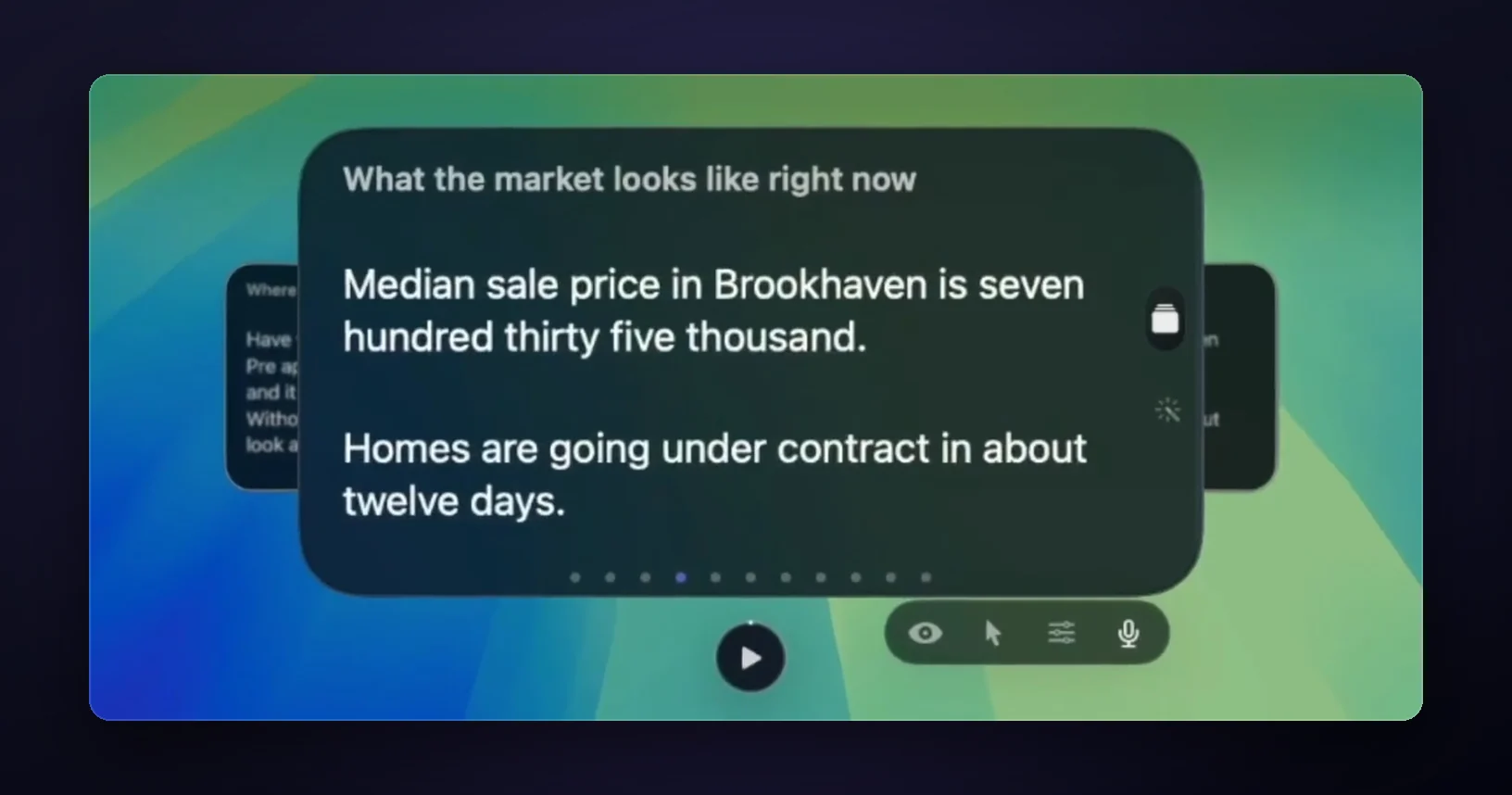
What GlideRail adds is placement plus invisibility. Its windows float anywhere, so your cue sheet can sit directly under the camera, and Pro windows stay invisible in the interview moments where screens get shared: walking through a portfolio, a case deck, or your code, without a visible notes window parked beside it. Cue Mode turns your sheet into cards (intro, stories, numbers, questions), so when they jump straight to "tell me about the outage," ⌘3 puts that card in front of you instead of you scrolling. More setup detail in interview notes on a Mac.
FAQ
Can interviewers tell when you're reading notes?
When you read verbatim, yes: tracking eyes, flattened tone, and answers shaped for a different question than the one asked. Quick glances at cue words read as thinking; nobody clocks them. The fix is note format, not better hiding: five words per topic, positioned near the camera.
Should I tell the interviewer I'm using notes?
You can. "I jotted a few notes so I don't forget my questions" reads as prepared, not weak. Most candidates don't announce it and don't need to. Decent test: if you'd be uncomfortable admitting it when asked directly, you've drifted from notes toward a script. Fix the notes.
Is it cheating to use ChatGPT to prepare for an interview?
No. Researching the company, drafting your stories, and rehearsing answers with AI is preparation; even employers cracking down draw the line at use during the interview, as Amazon's guidance does. Just make sure the words you say live are ones you actually own; you'll be asked follow-ups.
Are notes OK in a technical interview?
For the conversational rounds, same rules as above. For coding assessments, the platform's rules govern: many run proctoring that flags tab switches and outside tools, and closed-book means closed-book. If the format is unclear, ask the recruiter what's allowed. Asking costs nothing and signals integrity.
Is a video interview different from in-person for notes?
The principle is identical: in person you'd bring a padfolio and nobody would blink. Video actually tempts worse habits: full paragraphs on a second monitor, which shows in your eyes. Same rule both places: cue words you glance at, not text you read.
If interviews are on your calendar, prep is the part you control. Download GlideRail free: the full notes app costs nothing, and there's a 7-day free Pro trial, so you can build your interview sheet today and start the trial the week of the interview.
Written by Takumi Mitchell, maker of GlideRail. Last updated October 1, 2026.